



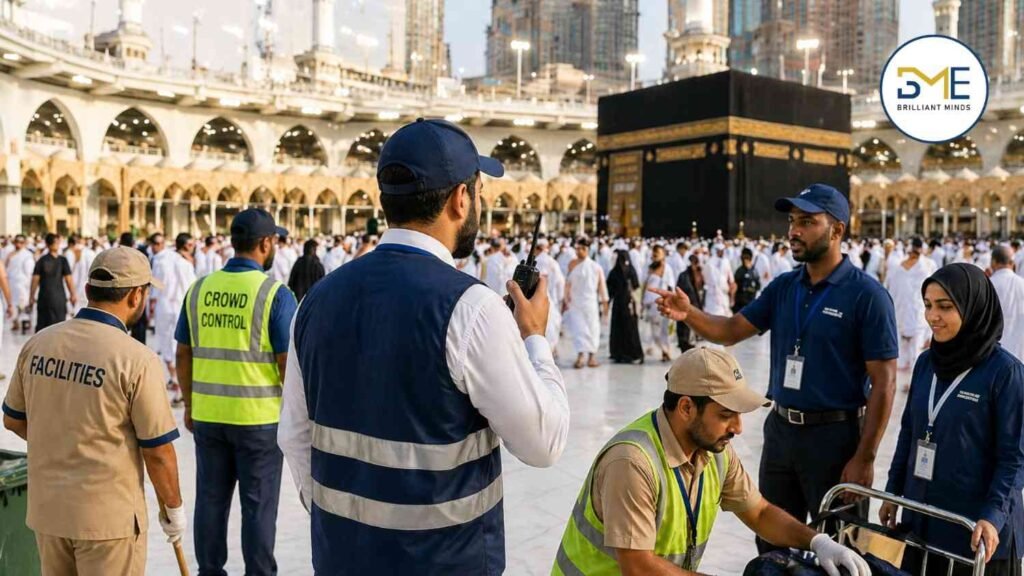
Understanding Hajj staff requirements is essential for hotels, transport companies, logistics providers, and catering businesses to ensure smooth operations during peak days.Hajj is one of the largest annual gatherings in the world, bringing millions of pilgrims to Makkah and surrounding regions. For businesses operating during this period, one of the biggest challenges is understanding how many staff are required to handle the surge in demand.
Whether you manage a hotel, transport service, logistics company, or catering operation, proper workforce planning is critical. In this guide, we break down staffing needs and explain how temporary staffing solutions can help you scale efficiently. Understanding Hajj staff requirements is essential for businesses operating during the pilgrimage season.
Why Staffing Planning is Critical During Hajj
During the Hajj season, demand for services increases dramatically within a short time frame. Businesses that fail to plan their Hajj staff requirements often face:
- Operational delays
- Poor customer experience
- Compliance issues
- Increased costs due to last-minute hiring
Therefore, planning workforce needs in advance helps maintain service quality and operational efficiency.
Hajj Staff Requirements by Industry
Different industries require different workforce sizes depending on their operations. Below is a general breakdown of Hajj staff requirements across key sectors:
Staffing Requirements Table
| Industry | Roles Needed | Estimated Increase During Hajj | Key Responsibilities |
|---|---|---|---|
| Hospitality | Housekeeping, waiters, front desk | 2x – 3x | Guest services, room turnover |
| Transport | Drivers, coordinators | 2x – 4x | Pilgrim transportation |
| Logistics | Loaders, warehouse staff | 3x – 5x | Goods movement, supply chain |
| Catering | Kitchen helpers, servers | 2x – 3x | Food preparation & service |
| Facilities | Cleaners, maintenance staff | 2x – 4x | Hygiene & operations |
For large-scale operations, this can translate into hundreds of temporary workers within a few weeks.
For compliance and legal hiring, businesses must follow Ajeer regulations. Read our complete guide on Ajeer for Hajj
Key Roles in High Demand During Hajj
Based on industry trends, the following roles are consistently in high demand:
- Housekeeping staff for hotels and accommodations
- Drivers for transport and shuttle services
- Loaders and warehouse workers for logistics
- Kitchen helpers and catering staff
- Crowd controllers and guest service agents
These roles are critical in meeting Hajj staff requirements across Makkah and Madinah.
Temporary vs Permanent Staffing for Hajj Operations
| Factor | Temporary Staffing | Permanent Hiring |
|---|---|---|
| Flexibility | High | Low |
| Cost | Lower | Higher |
| Hiring Speed | Fast (24–72 hours) | Slow |
| Scalability | Easy | Limited |
Temporary staffing is the most effective way to meet fluctuating Hajj staff requirements without long-term commitments.
Challenges Businesses Face During Hajj Staffing
Without proper planning, companies often struggle with:
- Finding workers at the last minute
- Managing large teams efficiently
- Ensuring compliance with Ajeer regulations
- Handling worker documentation and approvals
This is why many businesses rely on staffing partners to manage their Hajj staff requirements efficiently.
How Staffing Agencies Help During Hajj Season
Professional staffing agencies simplify workforce management by:
- Providing pre-screened and trained workers
- Handling Ajeer registration and compliance
- Deploying staff within 24–48 hours
- Managing logistics and workforce coordination
If you are planning your operations, explore our temporary staffing solutions for Hajj to meet your workforce needs efficiently.
How Early Should You Start Planning Hajj Staffing?
Timing plays a crucial role in meeting your Hajj staff requirements.
| Activity | Recommended Timeline |
|---|---|
| Workforce planning | 4–6 weeks before Hajj |
| Ajeer registration | 2–3 weeks before |
| Final deployment | 1 week before |
Businesses that delay planning often face higher costs and limited staff availability.
Frequently Asked Questions About Hajj Staffing
Q1: How many staff are typically required for Hajj operations?
The number of staff depends on the size of the business. However, most companies increase their workforce by 2x to 5x to meet Hajj demand.
Q2: How quickly can temporary staff be deployed?
Staff can usually be deployed within 24 to 48 hours, depending on documentation and requirements.
Q3: Is Ajeer registration mandatory?
Yes, all temporary workers must be registered through the Ajeer platform to comply with Saudi regulations.
Q4: Which industries need the most staff during Hajj?
Hospitality, transport, logistics, catering, and facilities management sectors require the highest workforce.
Q5: When should businesses start planning staffing?
At least 4 to 6 weeks before Hajj to ensure proper workforce availability.
Q6: Can staffing agencies manage both hiring and compliance?
Yes, agencies handle recruitment, documentation, Ajeer compliance, and deployment.
Conclusion
Hajj operations require careful planning across multiple industries. From hospitality and transport to logistics and facilities management, understanding and managing Hajj staff requirements is essential for smooth operations.
Businesses that plan early and partner with reliable staffing providers can ensure efficiency, compliance, and high service quality during this critical period.
Plan Your Hajj Staffing Today
Need trained and reliable staff for your Hajj operations?
Get workforce deployed within 24–48 hours
Fully Ajeer-compliant staffing solutions
Flexible hiring across all industries
📞 Contact Us
Phone / WhatsApp: Chat on WhatsApp
Email: Send Email
Website: Visit Website